Steam locomotives
Model Steam Locomotives
There is a distinct magic in the sound of a heavy train working its way up a steep mountain grade. The rhythmic engine chuffing, the sudden hiss of escaping pressure and the tall column of white smoke against the cold sky evoke a past of raw mechanical power. Steam engines were the power behind travel for many years, and influenced trade and connected isolated areas. Although real railroads retired these massive iron horses generations ago, the passion for them remains completely alive.
At the BYMRR Train Store, we share that exact obsession. We know that choosing a model steam locomotive is not just a random purchase. It is a deliberate commitment to preserving a piece of industrial history on your layout. Whether you want to recreate the gritty atmosphere of a coal hauler or capture the sleek elegance of a mid-century passenger train, the right engine forms the absolute heart of your miniature world.
Showing all 10 resultsSorted by price: low to high
-
Sale!

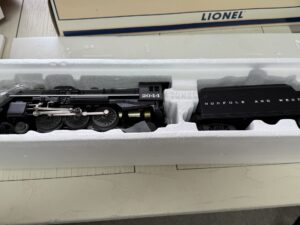
Lionel 6-18661 NW 4-6-2 Paci...
Original price was: $150.00.$59.99Current price is: $59.99. Add to cart -
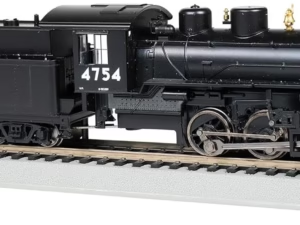
Bachmann Trains – Prairi...
$117.49 Add to cart -
Bachmann Trains – R R...
$175.49 Add to cart -
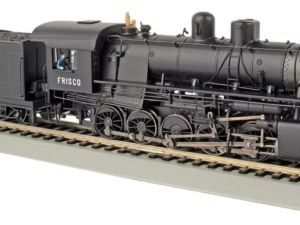
1/87 HO Scale 0-4-0 Steam Trai...
$223.49 Add to cart -
Bachmann Spectrum® 2-10-0 Rus...
$228.49 Add to cart -
Sale!
Lionel N&W 4-6-2 engine a...
Original price was: $280.00.$252.00Current price is: $252.00. Add to cart -
Bachmann Trains 4-8-2 Light DC...
$253.99 Add to cart -
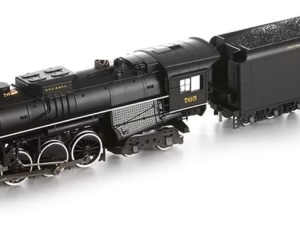
Bachmann 2-8-4 Berkshire Steam...
$309.48 Add to cart -
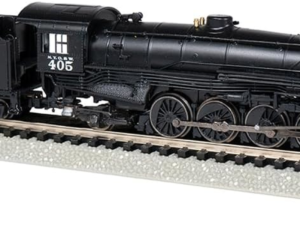
Bachmann Trains – USRA 0...
$347.49 Add to cart -
Sale!
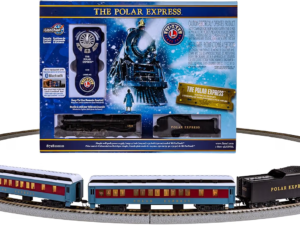
Lionel The Polar Express LionC...
Original price was: $449.99.$399.99Current price is: $399.99. Add to cart

Why Steam Captures the Railroader’s Imagination
Spend a few minutes watching any active layout and you will notice a trend. Diesel locomotives are dependable workhorses that quietly hum along with predictable efficiency. But when a model steam train rolls onto the mainline, everyone in the room stops to look.
The appeal is deeply visual. Unlike diesels, where the motor is hidden behind flat steel side panels, a steam engine wears its machinery on the outside. You can see the intricate dance of the side rods, the precise movement of the valve gear, and the counterweights spinning on the wheels. It feels truly alive.
Capturing this complex energy in miniature requires exceptional engineering. The model railway steam locomotives built today are light-years ahead of the older models of the past. Modern manufacturing allows for cast-metal bodies that provide excellent weight for traction, precision-balanced internal flywheels for smooth slow-speed crawling, and flexible wheelbases that handle curves without losing electrical power. When you open the throttle on a premium scale model, you are operating a finely tuned piece of machinery designed to replicate real physics perfectly.
Selecting Your Engine: Scales and Wheel Setups
Choosing the perfect engine requires balancing your physical room constraints with your historical interests. Because steam engines were highly specialized machines built for specific tasks, matching the right locomotive to your layout’s purpose makes your setup feel grounded and authentic.
N Scale vs. HO Scale
Available space is usually the ultimate deciding factor in model railroading. If you want to model sweeping landscapes, long freight runs, and deep mountain valleys, N scale is an excellent choice. In the past, N scale steam engines had a reputation for finicky electrical pickup due to their light weight. However, current production models utilize improved frame engineering and tender-weighted pickups, making them incredibly reliable runners.
If your focus is on absolute detail and hands-on maintenance, HO scale remains the industry standard. An HO scale locomotive gives manufacturers the physical room to include separate grab irons, delicate cooling pipes, clear cab glass, and highly detailed cab interiors complete with painted gauges and firebox doors.
Understanding the Wheels
Steam engines are categorized by their wheel arrangements using a standard counting system. This system counts wheels from front to back by looking at the front pilot wheels, the center driving wheels, and the trailing wheels. Understanding this setup helps you choose an engine that matches your track layout’s operational needs.
Compact switchers are designed with no front or trailing wheels to maximize the weight resting directly on the drivers. They are perfect for small layouts, industrial sidings, and busy yard duties. Larger freight icons feature a leading pair of wheels to guide the engine into curves and a trailing pair to support a large firebox. These workhorses are built to pull heavy loads across long distances. For passenger speedsters, a four-wheel front setup provides excellent stability at high scale speeds, making these engines the perfect choice for pulling luxury passenger cars.
Award-Winning Realism: Sound and Dynamic Smoke
The days of traditional power packs and silent operation have not vanished, but digital control systems have completely transformed the hobby. Today, the finest model railroad steam locomotives arrive factory-equipped with advanced internal decoders that recognize both old-school analog signals and modern digital commands.
Our carefully curated inventory includes models that have earned top industry accolades, including prestigious reader choice awards and five-star community ratings for mechanical reliability. These high-performing engines feature high-definition sound decoders loaded with authentic sound files recorded directly from surviving real steam engines.
When you run a modern steam engine, the sound is not just a generic background drone. It is synchronized directly to the rotation of the wheels. When starting a heavy train, the exhaust chuffs are deep, loud, and spaced far apart to reflect the immense strain on the cylinders. As the train gains momentum, the chuffs naturally soften and blend into a steady, rhythmic pace. You gain full control over the independent whistle blows, the sharp clang of the air compressor, and the heavy ring of the brass bell as you approach a crossing.
To complete the sensory experience, many premium models feature synchronized puffing smoke units. These systems utilize a small heating element and an integrated fan piston timed directly to the motor drive. Instead of a continuous, unrealistic wisp of vapor, the engine emits distinct puffs of non-toxic smoke that sync perfectly with every single exhaust chuff, leaving a beautiful trailing cloud over your track.
Curating Your Roster with BYMRR
Building a collection of locomotives is a deeply personal journey. We understand that you are looking for an investment that runs flawlessly out of the box and stands up to hours of regular operating sessions. That is why we do not stock just any model that comes off an assembly line.
Our team rigorously checks the brands we carry, focusing on manufacturers that consistently deliver excellent motor performance, robust gears, and accurate historical paint schemes. From the bulletproof reliability of Bachmann to the exquisite detail of Walthers and the smooth-running precision of KATO mechanisms, we supply the engines we proudly run on our own layouts. Every model is backed by our dedication to authentic customer service and a deep knowledge base that helps you troubleshoot track wiring, programming, or radius choices long after your box arrives.
Take the Throttle of Your Next Layout Masterpiece
A model railroad layout is never truly complete. It is an evolving work of art that grows alongside your skills and historical interests. Introducing a high-quality steam locomotive to your fleet brings a dynamic sense of motion, history, and realism that completely transforms an ordinary operating session.
We invite you to browse our current inventory of premium steam models. Whether you are searching for a rugged yard switcher or a mainline passenger engine, we are here to help you make the perfect choice for your layout.
Frequently Asked Questions
This issue usually stems from a power mismatch combined with unpowered plastic or isolated metal center points on your track switches. If a short locomotive passes over an unpowered spot, it can completely lose contact. To resolve this, ensure that your tender wheel power wipers are clean and properly adjusted to apply light, constant pressure to the back of the wheels.
This is commonly caused by an air bubble or too much fluid. A tiny air bubble can form directly over the heating chamber opening, preventing the fluid from reaching the wick. Alternatively, adding too many drops can drown the heating element entirely. Gently blow down the smokestack to break the bubble and seat the fluid, or drain any excess fluid if it is flooded.
A long, stiff frame, making a high body overhang on corners, is typical of large steam engines. The body's front will hit the obstruction and the wheels will come off the track if your track is near a tunnel portal, bridge side or scenery. Make sure that your track transitions are completely level, if they are not the front guide wheels will lift out of the rails.
Cleaning is a delicate matter. Avoid petroleum-based lubricants and heavy household sprays, they tend to attract dirt and damage plastics. Apply a single drop of plastic-compatible ultra-light synthetic oil to the small joints on the side rods with a fine needle point oiler and avoid putting oil on the wheels, as it will interfere with electrical power.
Yes, most modern digital engines automatically detect analog voltage. However, an analog power pack must be turned up significantly just to wake up the internal sound amplifier and start the idle sounds. The locomotive will not actually begin moving until the track receives higher voltage, which leaves you with a smaller control window for speed adjustment.