

Table of Contents
- What Makes a Great Model Train Kit for Adults
- Model Train Starter Sets: Where to Begin
- Best Model Train Brands and Manufacturers
- Understanding Scale: HO Scale Train Sets and Beyond
- Model Train Set Cost and Budget Planning
- Space, Assembly, and Ongoing Maintenance
- Choosing Your First Model Train Kit: A Decision Framework
- Frequently Asked Questions
Last Updated: October 9, 2026
What Makes a Great Model Train Kit for Adults
A great model train kit balances ease of assembly with authentic detail and long-term enjoyment. The best model train kits for adults combine quality locomotives, realistic scenery potential, and reliable track.
Build quality matters: cheap locomotives skip gears and derail within weeks, while mid-range and premium models run smoothly and hold value. Your track system also locks you into an ecosystem, so switching scales later means replacing everything.
Adults notice accurate paint schemes, prototype-correct couplers, and realistic weathering, recreating a specific era of railroad history rather than just running trains.
Satisfied customers choose a kit matching their actual space, skill level, and commitment, an elaborate HO layout in a cramped apartment frustrates, while a simple N scale starter set with expansion potential keeps you engaged.
Model Train Starter Sets: Where to Begin
Powered Starter Sets vs. Building Kits
Two product types dominate the beginner market.
Powered starter sets come ready to run: unpack the locomotive and cars, lay an oval of track, plug in the power supply, and trains move within 30 minutes.
The trade-off is limited customization: analog controllers lack precision, locomotives are entry-level with basic detail, and you’re locked into the set’s track configuration unless you buy more track.
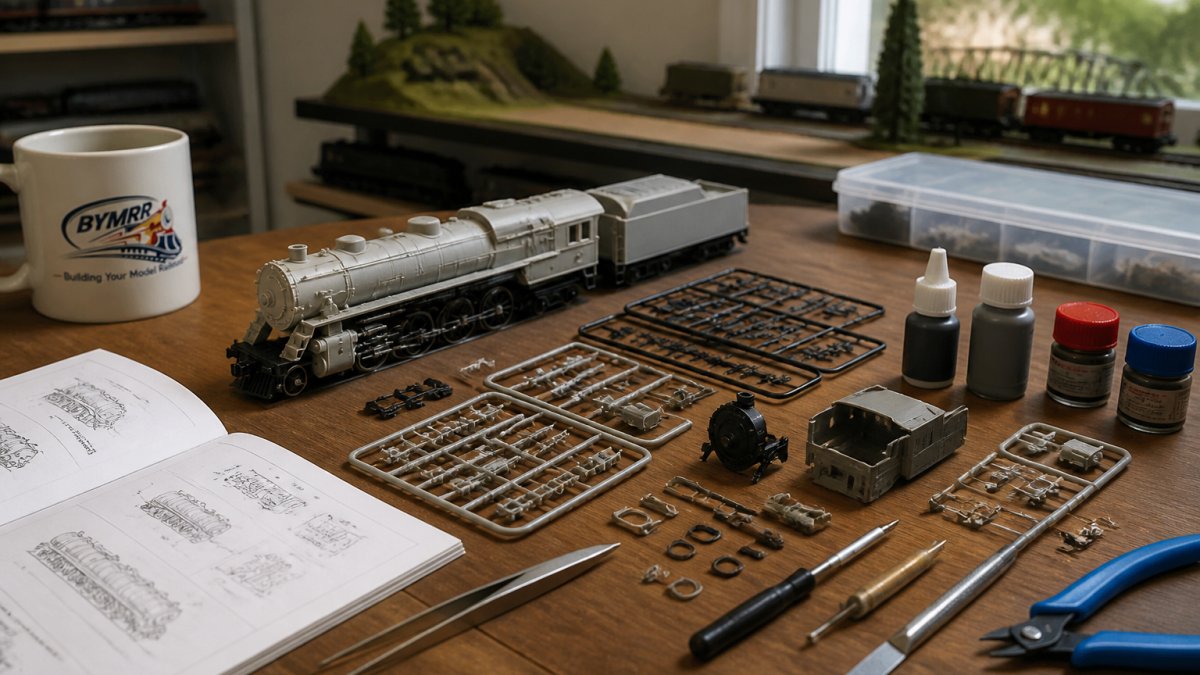
Building kits require assembly but offer deeper engagement: you construct the locomotive, wire the layout, and design track from scratch. A basic locomotive takes 4-8 hours, complex models longer.
Building kits develop skills faster, electrical theory, mechanical assembly, troubleshooting, and you can fix what breaks because you built it. Detail far exceeds powered-set models.
Choose powered sets for immediate results; building kits if you enjoy hands-on work and want deeper understanding of your equipment.
Key Features to Compare
Track compatibility is non-negotiable. HO track from one manufacturer rarely connects smoothly with another’s without adapters, so check that all components share the same rail profile and connector type.
Controller precision separates basic from advanced layouts. Analog controllers offer minimal control, while digital command control (DCC) lets you run multiple locomotives independently, program realistic acceleration, and add sound and lighting.
Power supply capacity matters as you add locomotives. A 40-watt transformer handles one or two; a third causes voltage drops and stalling. Plan for 60+ watts if expansion appeals to you.
Included accessories vary wildly, some kits include scenery, structures, and vegetation; others ship with bare track and a locomotive.
Replacement parts availability separates quality manufacturers from fly-by-night brands.
Best Model Train Brands and Manufacturers
Lionel has dominated the O gauge market since 1900.
Atlas builds highly detailed HO locomotives and cars with exceptional prototype accuracy for serious hobbyists. Expect mid-range to premium pricing.
Bachmann offers beginner-friendly HO and N scale kits with solid reliability at modest prices, including everything needed to start immediately.
Märklin, a German manufacturer, builds sophisticated HO systems with integrated digital control. Their unique three-rail track design means committing to Märklin means staying within their ecosystem.
Kato manufactures precision N scale equipment with exceptional detail and reliability, running quietly and smoothly.
Proto:87 specializes in ultra-detailed HO models for serious collectors, with museum-quality detail and commanding prices for hobbyists with dedicated space and budgets.
Each manufacturer targets different experience levels and priorities. Research which brand’s ecosystem matches your vision before committing.
Understanding Scale: HO Scale Train Sets and Beyond
Scale determines how much space your layout requires and which accessories fit. Understanding scale differences helps you choose a kit that fits your environment.
HO Scale: The Popular Choice
HO scale represents 1:87 of full-size trains, making it the most popular scale among serious model train hobbyists (Scales & More). An HO scale locomotive measures roughly 8-10 inches long. A small oval layout fits a 4-by-8-foot table.
The advantage of HO scale is breadth. Hundreds of manufacturers produce HO equipment. Track, locomotives, cars, buildings, and scenery components from different makers usually work together.
Detail quality peaks in HO scale because the size allows fine molding and painting.
The drawback is space. Even a modest HO layout demands a dedicated room or large table. Apartment dwellers often find HO impractical. Maintenance is more involved, more track means more cleaning, more locomotives mean more troubleshooting opportunities.
O Gauge and N Scale Alternatives
O gauge represents 1:48 scale, making locomotives roughly 15 inches long. O gauge trains are substantially larger and more strong than HO, appealing to older hobbyists with vision challenges and those who want impressive visual impact.
Lionel dominates O gauge. Their ecosystem is mature, parts are readily available, and vintage equipment remains serviceable, suiting collectors who value impressive appearance and ease of operation over prototypical accuracy.
N scale represents 1:160 scale, making locomotives about 4 inches long.
The trade-off is detail. Small size means less room for fine detail. Coupling cars requires steady hands and patience. Troubleshooting derailments is frustrating because everything is tiny.
Choose O gauge for impressive visual presence and ease of handling, HO scale for the broadest equipment selection and balanced detail, or N scale if space is your limiting constraint.
Model Train Set Cost and Budget Planning
Cost varies dramatically based on scale, detail level, and included components. Understanding price tiers helps you allocate your hobby budget effectively.
Entry-Level Kits
Entry-level powered starter sets typically deliver basic locomotives, simple track loops, and minimal scenery materials, getting you running trains within an hour. Quality varies, some include reliable locomotives that run for years, others ship with cheap motors that fail within months.
Entry-level kits suit hobbyists testing whether model railroading appeals to them before investing substantially. If you don’t enjoy the hobby, you’ve lost less money; if you love it, you’ll quickly outgrow the basic kit and want to upgrade.
The limitation of entry-level kits is their sealed ecosystem. You can’t easily swap the included locomotive for something better. The track configuration locks you into specific layouts. Upgrading means replacing the entire set, not just individual components.
Mid-Range and Premium Options
Mid-range model train kits include quality locomotives, compatible track systems, and scenery materials that support realistic layouts. These kits cost substantially more than entry-level sets but deliver equipment you won’t outgrow quickly. Mid-range locomotives run smoothly, hold detail well, and accept upgrade components.
Premium kits include highly detailed locomotives, extensive track systems, and comprehensive scenery materials, supporting elaborate layouts with multiple operating railroads, realistic scenery, and sophisticated control systems. Premium equipment appeals to serious hobbyists planning layouts they’ll enjoy for decades.
Budget considerations extend beyond the initial kit. Expansion track, additional locomotives, scenery materials, and tools accumulate costs. Plan for ongoing spending if you develop serious interest.
Long-Term Investment and Expansion
Model railroading rewards long-term investment. A quality mid-range locomotive purchased today will likely run reliably in 10 years if maintained properly. Vintage equipment from 20-30 years ago still operates when cared for.
This durability means your hobby budget compounds. Early purchases become the foundation for expanding layouts, a locomotive you buy this year can integrate into a much larger layout next year, and quality equipment holds value if you sell or trade it.
Plan expansion by choosing a scale and manufacturer ecosystem early. Switching scales later means replacing track, locomotives, and all scenery. Staying within a compatible ecosystem means your initial investment supports growing layouts indefinitely.
Space, Assembly, and Ongoing Maintenance
Layout Planning and Space Requirements
Space planning determines whether your layout succeeds or frustrates you. An oversized layout in cramped quarters becomes a permanent obstacle.
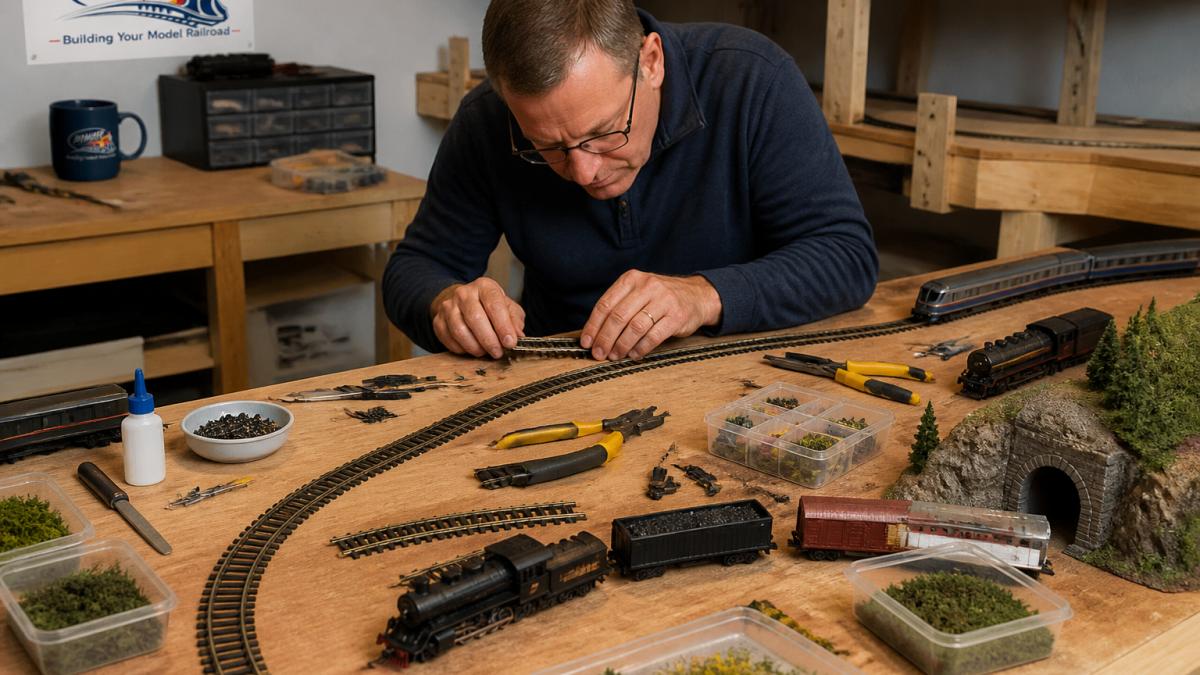
HO scale layouts demand dedicated space. A basic oval loop requires 4-by-8 feet. A layout with multiple sidings, yards, and scenery benefits from 6-by-12 feet or larger.
N scale fits smaller spaces. A 4-by-6-foot table accommodates a complete layout with multiple operating railroads, working in apartments, spare bedrooms, or basement corners where HO won’t fit.
O gauge requires less table space than HO but larger individual footprints per locomotive. A modest O gauge layout fits a 5-by-7-foot space.
Sketch your available space to scale before purchasing. Measure ceiling height, doorway widths, and electrical outlet locations. A layout that doesn’t fit your space becomes an expensive frustration.
Assembly Time and Skill Level
Powered starter sets assemble in 30-60 minutes. You unpack components, lay track, and connect the power supply. No special tools or technical knowledge required.
Building kits demand more time. A basic locomotive assembly takes 4-8 hours spread across multiple sessions. Complex models with detailed interiors and working mechanisms take 15-20 hours. Wiring a layout from scratch adds another 4-6 hours.
Assembly difficulty varies. Simple locomotive kits use snap-together plastic components and illustrated instructions. Complex kits require soldering, painting, and decal application. Skill develops through practice, your first kit teaches you techniques you’ll use on subsequent projects.
Beginners should start with powered sets or simple building kits. Success builds confidence and skills. Jumping to complex kits frustrates beginners and damages equipment through mishandling.
Maintenance and Troubleshooting
Model trains require regular maintenance to run reliably. Track collects dust and oxidation that causes electrical resistance and derailments.
Locomotives need occasional lubrication. Check manufacturer recommendations, most locomotives benefit from light oil on axle bearings and gears every 20-30 hours of operation. Over-lubrication causes dust accumulation that damages motors.
Wheels and couplers wear over time. Inspect wheels for flat spots that cause rough running. Replace worn wheels before they damage track.
Electrical connections corrode, especially in humid environments. Clean track joiners and power connections quarterly. Corrosion causes voltage drops that stall locomotives mid-layout.
Common troubleshooting: a locomotive that stalls in specific locations suggests dirty track, one that won’t couple suggests bent couplers, and one that derails on curves suggests wheels out of gauge.
Choosing Your First Model Train Kit: A Decision Framework
Start by answering these questions honestly.
How much space do you have? Measure your available area in feet. HO scale needs 4-by-8 minimum. N scale works in 4-by-6.
How much assembly work appeals to you? Do you enjoy building things, or do you want to operate trains immediately?
What’s your budget for the initial kit? Entry-level kits cost less than mid-range kits. Mid-range kits deliver better reliability and longevity.
Will you expand later? If expansion appeals to you, choose a kit from an established manufacturer with broad ecosystem support.
Do you want realistic operations or simple fun? Prototype-accurate layouts demand attention to detail, proper wiring, and realistic scenery.
Can you commit to regular maintenance? Model trains need monthly track cleaning and occasional lubrication.
Answer these questions, then research kits that match your answers.
Choosing the right model train kit for adults starts with honest assessment of your space, skills, and commitment level. At BYMRR, we help hobbyists navigate these decisions through comprehensive guides and curated product selections, with resources addressing everything from layout planning to advanced DCC wiring.
Frequently Asked Questions
What is the difference between a model train kit and a train set?
A model train set is a complete, ready-to-run package with a powered locomotive, rolling stock, track, and controller included, you unbox it and operate it immediately. A model train kit requires assembly; you build the locomotive or cars from components, often with more detailed parts and customization options. Sets suit adults who want immediate operation, while kits appeal to those who enjoy the building process and want greater control over detail and authenticity.
How much does a model train set cost?
Model train set costs vary widely based on scale, brand, and complexity. Entry-level powered starter sets begin at lower price points, while mid-range options with better detail and more track cost more. Premium kits with high-quality locomotives and extensive rolling stock command higher prices. For current pricing on specific kits, visit BYMRR’s website or contact our team directly, we offer competitive pricing and can help you find options that fit your budget.
Which model train scale is best for beginners?
HO scale is the most beginner-friendly choice. It offers excellent detail and realism, a wide selection of affordable starter sets, and reasonable space requirements, most layouts fit in a basement corner or spare room. O gauge is larger and easier to handle but needs more space. N scale is compact but requires more precision during assembly and operation. Start with HO scale unless you have specific space constraints or prefer the larger size of O gauge.
Can you expand a model train starter set over time?
Yes. Most quality starter sets use standard track and compatible controllers, allowing you to add more track sections, additional locomotives, freight cars, and accessories. Before purchasing, confirm the brand and scale of your starter set, then verify compatibility with expansion products. You can grow your layout gradually without replacing your original investment.