
Why Is Your Model Train Running Slow?
Slow model trains can ruin a fun evening on the layout. You turn the throttle to max, but your locomotive crawls along the rails or stalls on simple curves. Most layout builders blame motor wear right away, but the true culprit is almost always low voltage at the track. Getting clean, steady power to your rails makes an instant difference in performance. Upgrading your setup to a high-quality Bachmann power supply gives your engine the exact electrical push it needs to hit smooth, realistic speeds without overheating the motor.
Here at BYMRR, we spent years testing tracks, repairing vintage engines, and wiring layouts of all shapes. Our team knows how frustrating it feels when your locomotive hesitates midway through a run. That is why we focus on solid electrical foundations first. When your track delivers consistent current, your engines run better, sound better, and pull heavier consists without straining.
Let us look closely at how proper power distribution changes your entire operating experience.
How Does a Bachmann Power Supply Improve Train Speed?
Standard starter set controllers often struggle to output stable current across long sections of track. As your train travels farther from the wire connections, electrical resistance builds up. Voltage drops quickly, leaving your engine underpowered.
A heavy-duty Bachmann power supply solves this issue by maintaining a stable direct current output under varying loads. Modern power units use advanced circuit boards to regulate voltage spikes and prevent thermal shutdown. Instead of dropping power when a heavy locomotive pulls uphill, the unit delivers steady amperage to keep wheels spinning at a uniform rate.
The difference shows up immediately across three main operational areas:
- Steady Voltage Delivery: Regulated power packs stop voltage dips across long track sections.
- Higher Amperage Headroom: Extra amps allow multi-engine consists to run without slowing down.
- Smoother Throttle Response: Fine-tuned rheostats give you precise slow-speed control and top-end speed boost.
Choosing the Right Power Pack for Your Layout
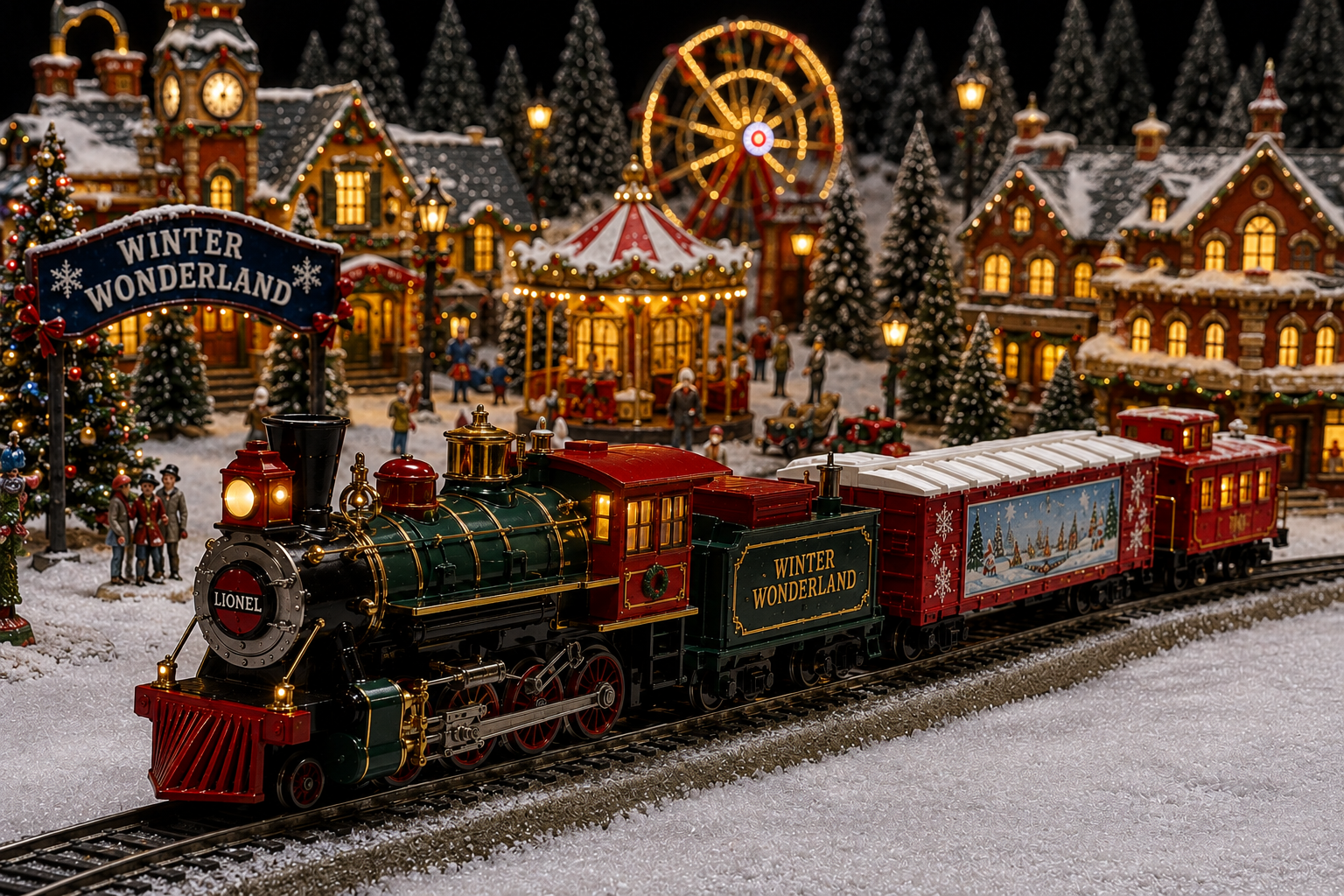
Not all transformers handle layouts the same way. An N-scale engine needs far less current than a large DC locomotive or a heavy Lionel winter wonderland train circling a holiday display. Matching your transformer output to your equipment scale prevents blown fuses and sluggish motors.
Small starter power packs typically output around 0.5 to 0.7 amps. That is fine for an oval of track around a tree, but larger layouts require at least 1.5 to 2 amps of continuous power.
Here is what to check when selecting your upgrade:
- Total Amp Output: Look for transformers rated at 1.5 amps or higher for multi-train operations.
- Built-in Circuit Protection: Thermal breakers protect internal locomotive decoders from short circuits.
- Auxiliary AC Terminals: Dedicated accessory terminals power switch machines and streetlights separately, keeping main track power free for locomotives.
Step-by-Step Wiring Fixes for Maximum Voltage
Even the strongest transformer cannot force electricity through loose rail joiners or dirty track. Power loss happens step by step along your line if you rely on a single terminal feeder track.
Improving your speed requires simple, direct electrical paths:
- Install Heavy Bus Wires: Run 14-gauge copper wires under your benchwork parallel to your main lines.
- Solder Feeder Drops: Attach 18-gauge feeder wires from the bus wire to the rail every six feet.
- Clean Rail Tops: Use a rubber track-cleaning block to strip invisible oxidation off metal surfaces.
- Tighten Rail Joiners: Pliers help crimp loose metal joiners to secure mechanical and electrical connections.
Adding multiple feeder drops ensures your Bachmann power supply feeds current directly to every inch of track. Your locomotive will maintain the exact same speed on the back straightaway as it does right next to the control panel. Even a heavy seasonal display, such as a Lionel winter wonderland train, runs smoothly when track feeders distribute current evenly around the entire loop.
Connecting with the BYMRR Community
Building a great layout is a journey best shared with people who love the hobby. We love helping modelers solve tricky electrical bugs, design operation layouts, and select the right track components for their home terminals.
Need assistance with your layout power structure or track planning? Reach out through our official platform terminal at BYMRR. Our team is always ready to share practical advice, troubleshoot layout issues, and help you select the exact equipment needed to keep your trains running at peak performance.
Common Questions And Answer About Bachmann Power Supply
Can using a higher amp power supply damage my smaller scale locomotive motors?
No, higher amperage ratings will not damage your motors. Locomotives only draw the specific amperage they need from the power pack. Voltage causes motor damage if set too high, but excess amperage capacity simply provides clean, stable power without straining your transformer.
How many power feeder wires do I need for consistent layout speeds?
Install feeder wires every four to six feet along your main line layout. Connecting feeder drops directly to a main bus wire underneath your benchwork eliminates rail joiner resistance, keeping train speeds perfectly uniform across every section of track.
What is the difference between DC power packs and DCC power supplies?
Direct Current (DC) power packs control train speed by varying voltage sent straight to the rails. Digital Command Control (DCC) supplies deliver constant AC voltage to the track, sending digital signal commands directly to onboard decoders inside each individual locomotive.
Why does my transformer trip its internal circuit breaker during normal runs?
Circuit breakers trip when total current draw exceeds transformer limits or when a short circuit occurs. Check for metal debris across rail tops, misaligned wheel sets on turnouts, or dirty track joints that create electrical arcs and overload your power supply.