
Buying your first diesel train model is exciting, but choosing the right size can quickly become confusing. One model looks perfect on the shelf, while another seems better for building a layout. Every scale has its own purpose, and picking the right one from the start makes your hobby much more enjoyable. Our goal is to help you make a choice that fits your space, your budget, and your plans for the future.
Every week, we meet new collectors who ask the same question: “Which size should I buy first?” At BYMRR Train Store, we believe the answer depends on your goals rather than following what everyone else buys. A little planning at the beginning can save money, prevent frustration, and help you build a collection that keeps growing with you.
Why Train Size Makes a Big Difference
Many beginners pay attention to the locomotive but forget about its size. That single decision affects almost everything you add later.
Train size determines:
- How much room your layout needs
- The type of track you can use
- How much detail you will see
- Storage space for your collection
- Future expansion options
Choosing the right scale helps every new addition fit naturally into your layout. Mixing different sizes often creates problems with appearance and compatibility. A little thought today makes every purchase easier tomorrow.
Popular Model Train Scales Made Simple
Several scales are popular among collectors, and each one offers something different.
HO Scale
HO Scale is the favorite choice for many beginners. It offers a nice balance between detail and space. Plenty of locomotives, freight cars, buildings, and scenery are available, making it easy to expand your layout over time.
N Scale
N Scale is much smaller than HO. Collectors with limited room often choose this scale because it allows longer tracks and larger layouts without taking over the entire room.
O Scale
O Scale trains are larger and easier to handle. Many hobbyists enjoy the extra detail, especially if the layout is meant for display or family use.
G Scale
G Scale is designed for larger spaces and outdoor railroads. Bigger models create an impressive display, but they also require much more room.
No single scale is better than another. The right choice depends on where your railroad will be built and how you want it to grow.
How Much Space Do You Really Need?
Space should always guide your decision before buying a locomotive.
A large model may look impressive, but it can become difficult to use if your layout is too small. Curves become tighter, scenery feels crowded, and future expansion becomes limited.
A simple guide can help.
- Small shelves or apartments: N Scale works well.
- Spare bedrooms or home offices: HO Scale offers excellent flexibility.
- Large hobby rooms: O Scale gives you room for impressive displays.
- Outdoor layouts: G Scale is often the best fit.
Many experienced collectors started with a small layout and expanded it over several years. Starting small gives you time to learn what you enjoy most about the hobby.
Choosing a Diesel Train Model for Your Layout
Every layout tells a story. Your locomotive should match that story instead of becoming the only focus.
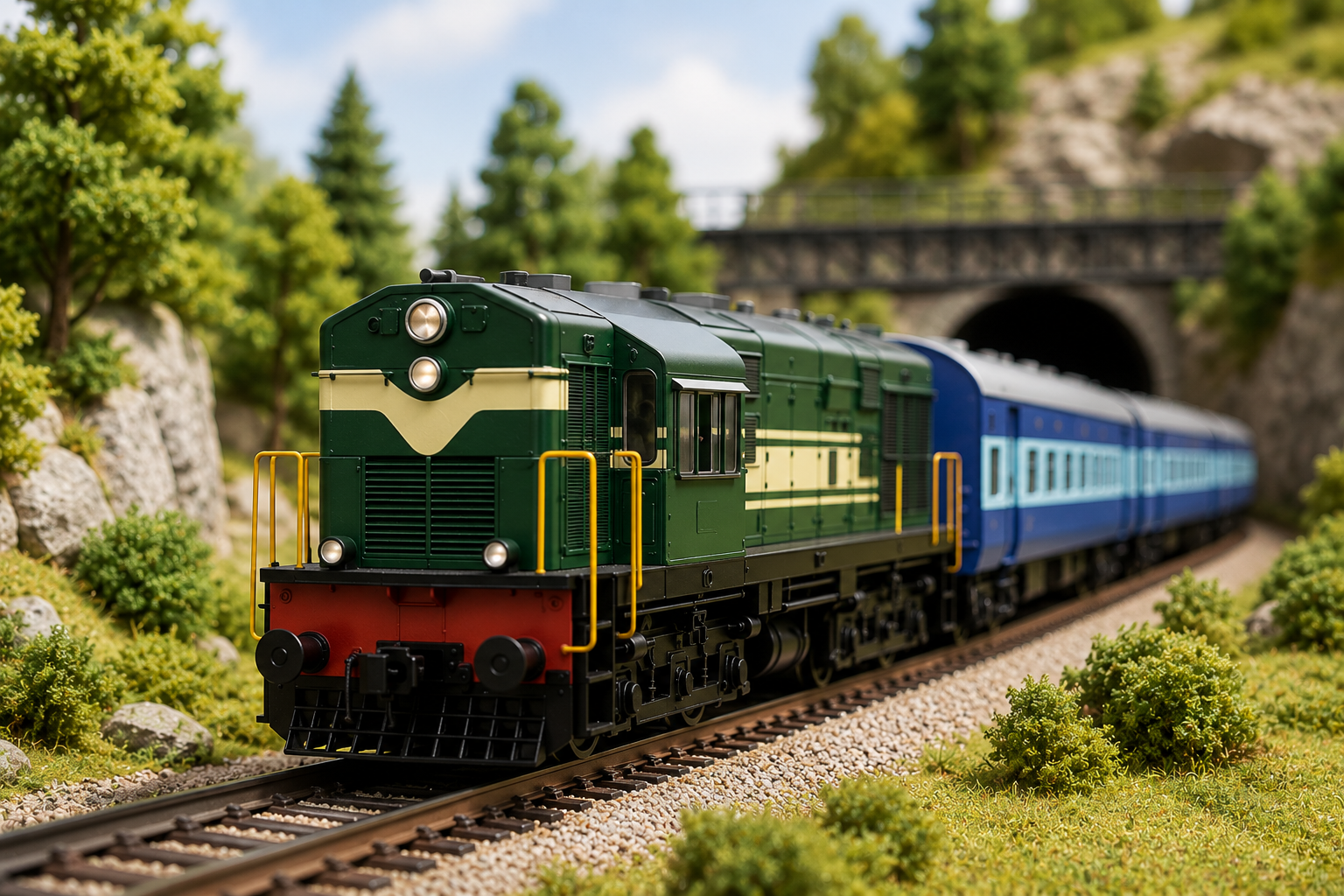
A diesel train model should fit comfortably on your track while leaving enough room for scenery, buildings, bridges, and stations. Planning everything together creates a layout that feels balanced and realistic.
Matching your locomotive with the right model train accessories also improves the overall appearance. Signals, crossings, figures, lighting, and freight loads may seem like small details, but they make the railroad feel alive without making it look crowded.
Many beginners buy accessories before planning the layout. We usually suggest doing the opposite. Build the railroad first, then add details little by little. Every new piece will have a purpose, and your layout will look much more natural.
What Should You Look For Before Buying?
Buying your first train should feel exciting, not stressful. Asking yourself a few simple questions can make the decision much easier.
Consider these points before making your purchase:
- How much space do you have available?
- Will your layout stay small or continue growing?
- Do you enjoy realistic scenery or collecting locomotives?
- Can you easily find matching parts later?
- Does the scale fit your budget?
Answering these questions helps narrow your options without feeling overwhelmed.
A good first purchase does not have to be expensive. Quality and compatibility are far more important than buying the biggest locomotive on the shelf.
How Can You Build Your Collection Without Overspending?
Many people think they need a large collection right away. That simply is not true. Some of the most impressive layouts started with one locomotive, a few pieces of track, and a clear plan.
We always recommend building your collection one step at a time. That approach gives you time to learn, improve your layout, and choose products that truly fit your railroad.
Start with the basics.
- A reliable locomotive
- A quality track set
- A power pack or controller
- A few freight or passenger cars
- Basic scenery for your chosen theme
After your trains are running smoothly, you can begin adding model train accessories such as buildings, trees, signals, streetlights, figures, and vehicles. Small additions often make a bigger difference than buying another locomotive.
Buying slowly also helps you stay within your budget. Every new item has a place on the layout instead of sitting unused on a shelf.
Small Details Create a Better Railroad
Every collector enjoys seeing trains move through a layout that feels complete. That feeling comes from careful planning rather than filling every empty space. Think about the scene you want to build.
A quiet farming community will look very different from a busy industrial yard. Mountain railroads need tunnels and bridges, while city layouts look better with streets, warehouses, and stations.
Keeping everything in the same scale makes the entire layout look more realistic. Buildings, people, vehicles, and scenery should all match your locomotive.
A well-planned layout also makes future expansion much easier. Adding another section later feels natural because everything already works together.
Around the middle of every project, many collectors begin looking for ways to add more character. That is often the right time to choose another diesel train model or expand your scenery. We enjoy helping collectors find products that fit their existing layouts instead of replacing what they already own.
Growing Your Skills Takes Time
Every experienced collector started as a beginner. Mistakes are part of learning, and every layout teaches something new. One person may enjoy building scenery, while another enjoys collecting locomotives from different railroads.
Take your time with each project. Read instructions carefully, test your track before adding scenery, and make changes whenever needed. There is no deadline to finish a layout.
Patience usually leads to better results than trying to complete everything in a single weekend.
Our advice is always simple. Buy products that match your plans today while leaving room for tomorrow. That approach saves money and keeps the hobby enjoyable for years.
Build Your Railroad With Confidence
Every collection begins with one good decision. Choosing the right size gives you a strong foundation for every track section, locomotive, and scenery piece you add later. Taking your time today often leads to a layout you will enjoy for many years.
We are always happy to share practical advice and help you compare products that fit your goals. At BYMRR Train Store, we believe building a model railroad should be enjoyable from the very first purchase to the final detail. Whenever you are ready to grow your collection, we are here to help you find quality products that fit naturally into your layout.
Common Questions Answers About Diesel Train Model
Which train scale is easiest for children and beginners?
HO Scale is often the easiest place to start. It offers a good balance of size, detail, and product availability. Parts are easy to find, layouts fit comfortably in many homes, and beginners have plenty of options for future expansion.
Should I buy scenery before buying my train?
Starting with the locomotive and track is usually the better choice. Once the railroad is running properly, you can choose scenery that matches your layout. That approach helps avoid buying items that may not fit your final design.
How often should I clean my model trains and track?
Light cleaning every few weeks keeps trains running smoothly if you use them regularly. Dust, dirt, and oil can reduce performance over time. Simple maintenance helps protect your investment and keeps your railroad operating the way it should.
How do I know which accessories match my train?
Always check that accessories are made for the same scale as your locomotive. Buildings, figures, vehicles, and model train accessories should all match the chosen scale. Keeping everything consistent creates a layout that looks balanced and realistic.